Unlocking the $2T Opportunity
The Age-Old Enterprise Problem
Procore Technologies is the leading construction management platform — but in 2024, its Quality & Safety portfolio was falling behind. In the company's rush to expand into Preconstruction and Financials, core tools that construction teams relied on daily had been neglected for years.
The investment strategy left Procore vulnerable: too many products, never enough resources dedicated to any single one. Focused point solutions were winning deals — iterating fast on safety features that Procore's customers had been requesting for years.
Regulatory Shifts
EU Construction Products Regulation (2025) mandates digital product passports and structured safety reporting. OSHA's 2026 updates require digital safety records.
Market Opportunity
Procore held just 3% of the $2T EU construction market. Safety and compliance capabilities were the key to unlocking it.
Competitive Threat
Point solutions were winning deals with a singular focus on safety — enterprise clients were actively evaluating alternatives and becoming at risk of churn.
The business invested heavily in 2025, but investment alone does not produce outcomes.
We needed to build the engine that would turn that investment into a defensible market position.
$1M+
REVENUE IMPACT
133%
TEAM GROWTH
4
REFERENCE CUSTOMERS
ROLE
Senior Manager, Product Design — Quality & Safety, Media & Workflows
SCOPE
Safety product line strategy, customer co-creation, cross-platform data capture, media evolution, GTM enablement
TEAM
Scaled my direct team of globally distributed designers from 3 to 9 designers (133% growth) across the US, South America, Egypt, and India.
Led strategy across 4 product portfolios, 2 outside my direct span. Aligning product, engineering, and research around a unified vision.
$1M+ in revenue impact and positioning Procore's Safety & Compliance portfolio to capture the $2T EU construction market
20 releases shipped in a single year. 11 GAs, 4 betas, and 5 NextGen Silver migrations, while simultaneously scaling the team 133% and standing up an entirely new safety product line
~8-second reduction per input field across every form in the platform through a data capture re-architecture that resolved years of customer complaints and established the foundation for AI automation
When I took over the Q&S and Media design teams, there were 2 designers covering Quality & Safety and 1 covering Media. Within months, the entire division grew by 350%. I onboarded 6 new designers across 4 countries, shipped an entire safety product line, and competed against specialized point solutions, all while customers were actively evaluating alternatives.
OPERATIONAL INFRASTRUCTURE
Designing the Operating Model
Instead of focusing only on my areas, I worked with my leadership peers to create a unified operating model for design across our entire Project Execution area, mainly influenced by the Q&S team's bottom-up planning approach. This effort included standardizing Design's JIRA usage to ensure traceable reporting, integrating AI prompts to quickly identify missing requirements, and teaching designers to estimate their work to ensure more stable roadmaps.
LOW CLARITY
Strategic
Initiatives
Full discovery through delivery. For new features, tool rewrites, and undefined problem spaces.
~12 weeks
MEDIUM CLARITY
Feature Enhancements
Defined goals, skip discovery. For known improvements with clear constraints.
~6–10 weeks
HIGH CLARITY
LODO
(Low-Touch)
Minimal design needed. For well-understood, scoped changes.
~2 weeks (1 Sprint)
CUSTOMER CO-CREATION
Launching the Safety Innovation Council
To build the right products, we needed to be in the field — not guessing from behind screens. I created a structured co-creation program pairing enterprise clients with our product teams.
11
8
7
The dual value exchange: clients got a co-creation experience shaping tools they'd actually use. Procore got usability testing participants, job site context, and a rapid validation pipeline. Customers who might have churned became co-creators. Customers evaluating competitors became advocates. And the insights we gathered revealed problems no one had been able to crack from inside the building.
Every project connects to the same goal: building the safety product line and data capture infrastructure to secure Procore's EMEA competitive position. I directed each cross-functional team — setting strategy, aligning dependencies, and ensuring quality execution — while empowering designers to own the craft.
1
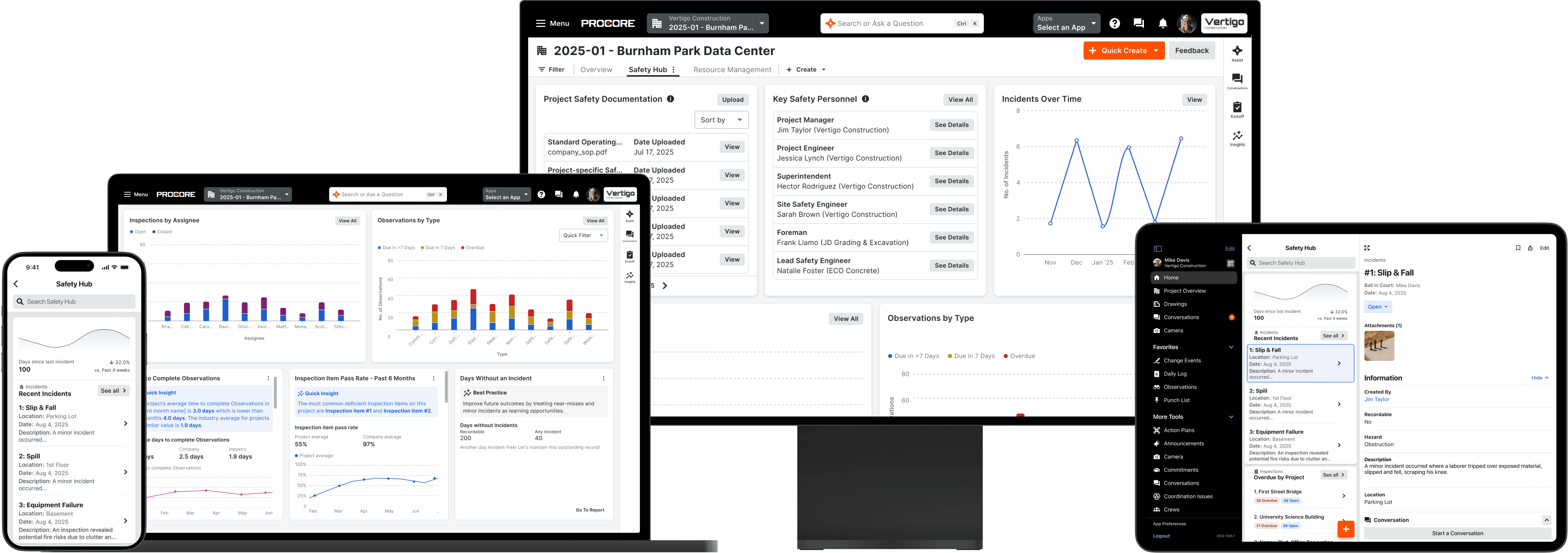
Safety Hub
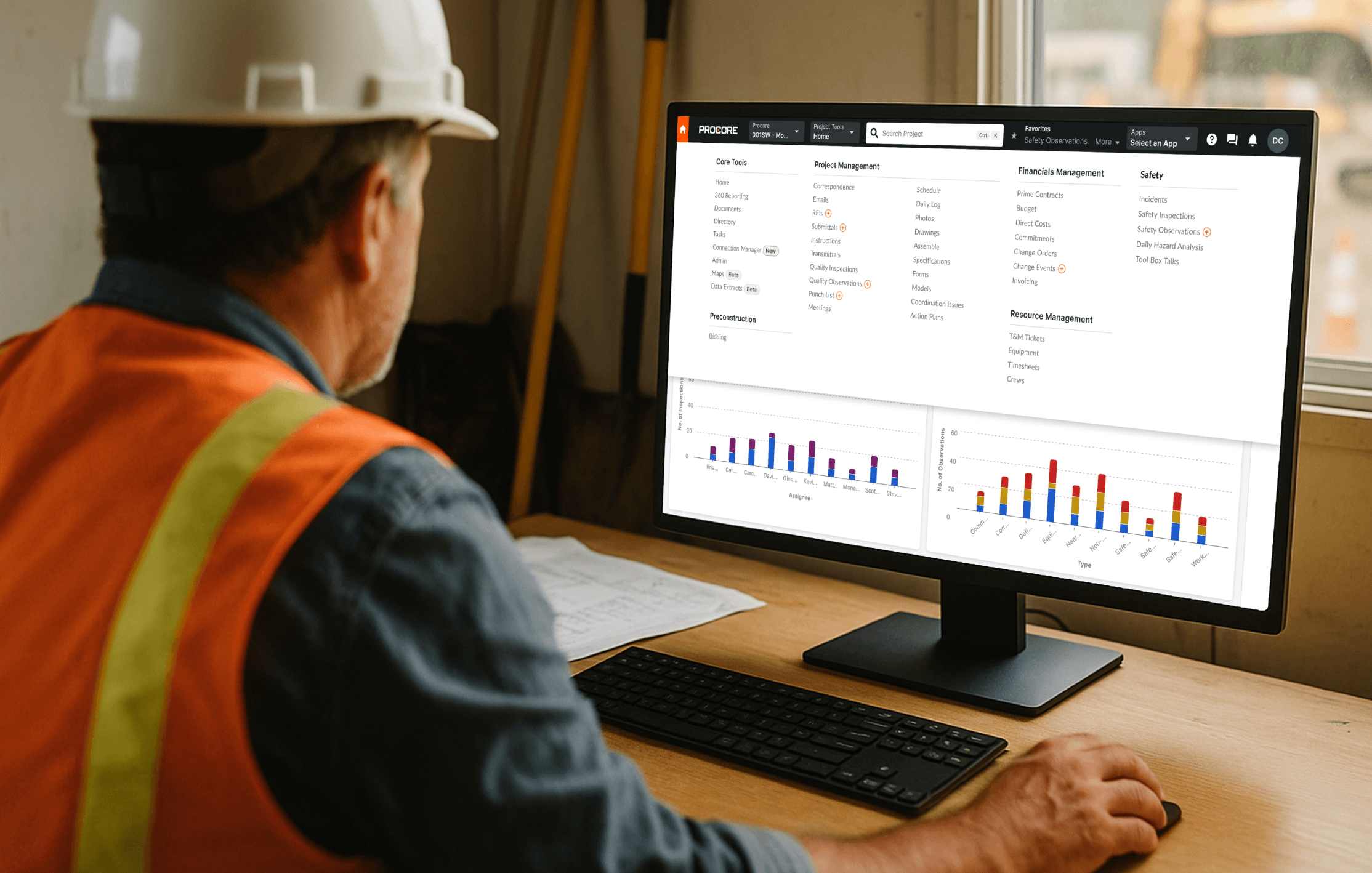
A centralized safety dashboard — the first of its kind in Procore — giving safety leaders a single view into company and project-level safety data. Incidents over time, observations by type, inspection results, safety personnel metrics, with drill-down from high-level trends to specific records.
My Role:
Drove the strategy and directed the cross-functional team. Worked directly with the Hubs team (a separate org) to drive requirement changes, identified UI discrepancies across three groups, and got them all aligned. Led mobile strategy for the Hub experience.
Why it Matters:
Before this, there was no centralized safety dashboard. The Hub transforms safety from reactive documentation into proactive risk management, exactly what EU compliance requires.
2
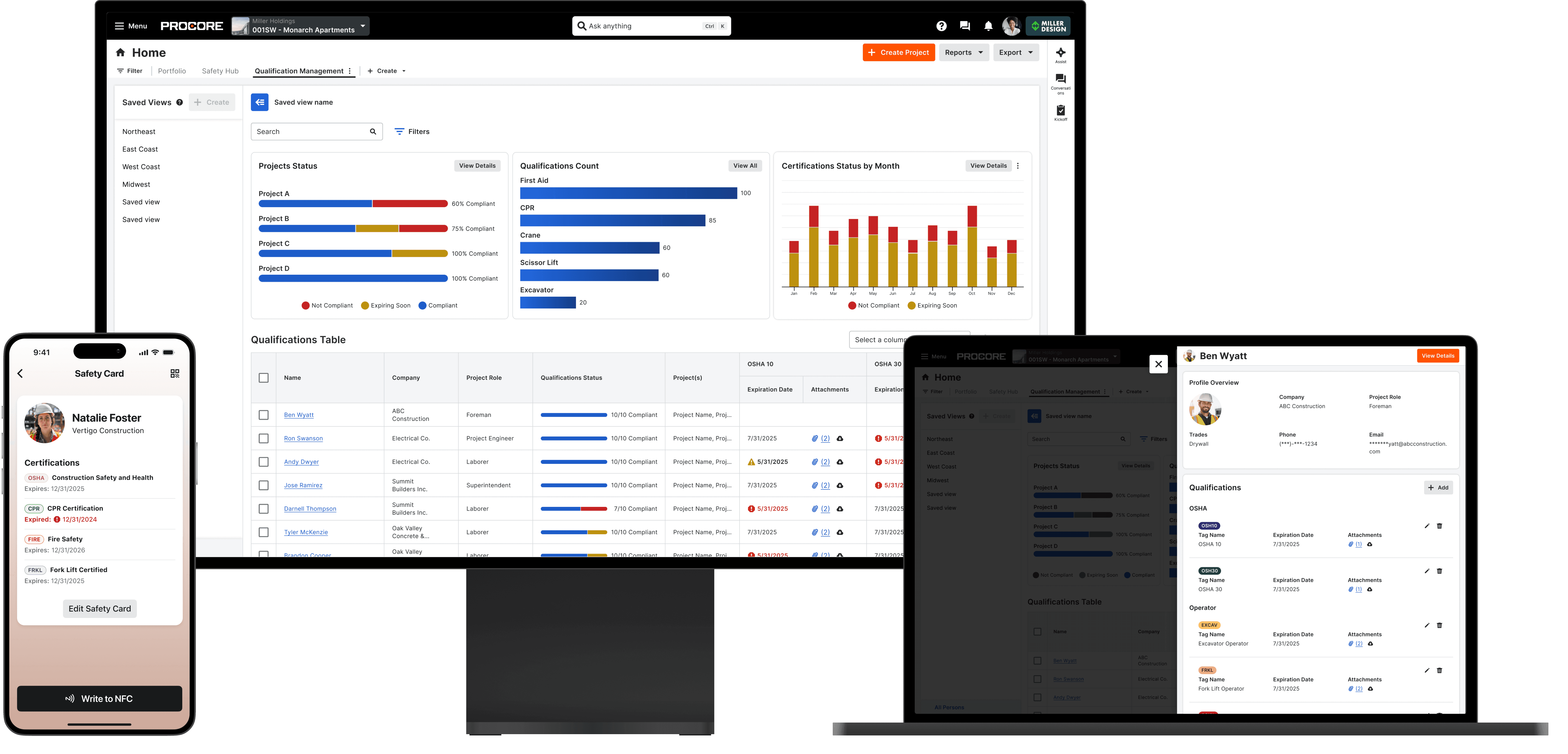
Qualifications Management Hub
A net-new tool for tracking worker qualifications and certifications — expiration dates, compliance status, and qualification details — all in a single view. Supervisors can monitor workforce readiness from the web dashboard and update profiles with ease.
My Role:
Directed the cross-functional team and helped set the strategy and vision. This tool was shaped directly by Safety Innovation Council research — customer discovery, jobsite visits, competitive analysis, and regulatory requirements.
Why it Matters:
Expired certifications can shut down projects and expose companies to significant liability. This moves compliance from reactive to proactive.
3
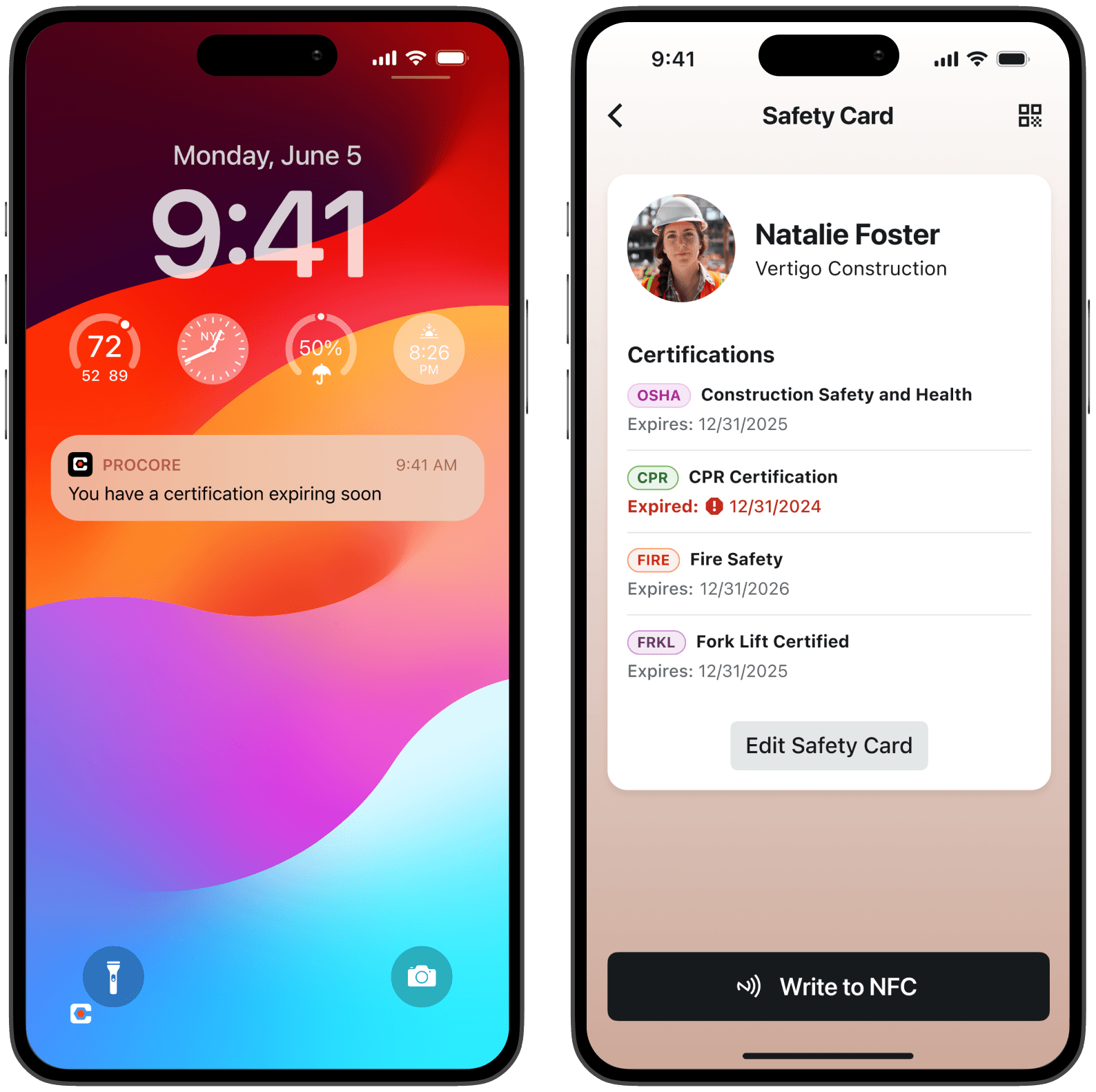
Safety Card
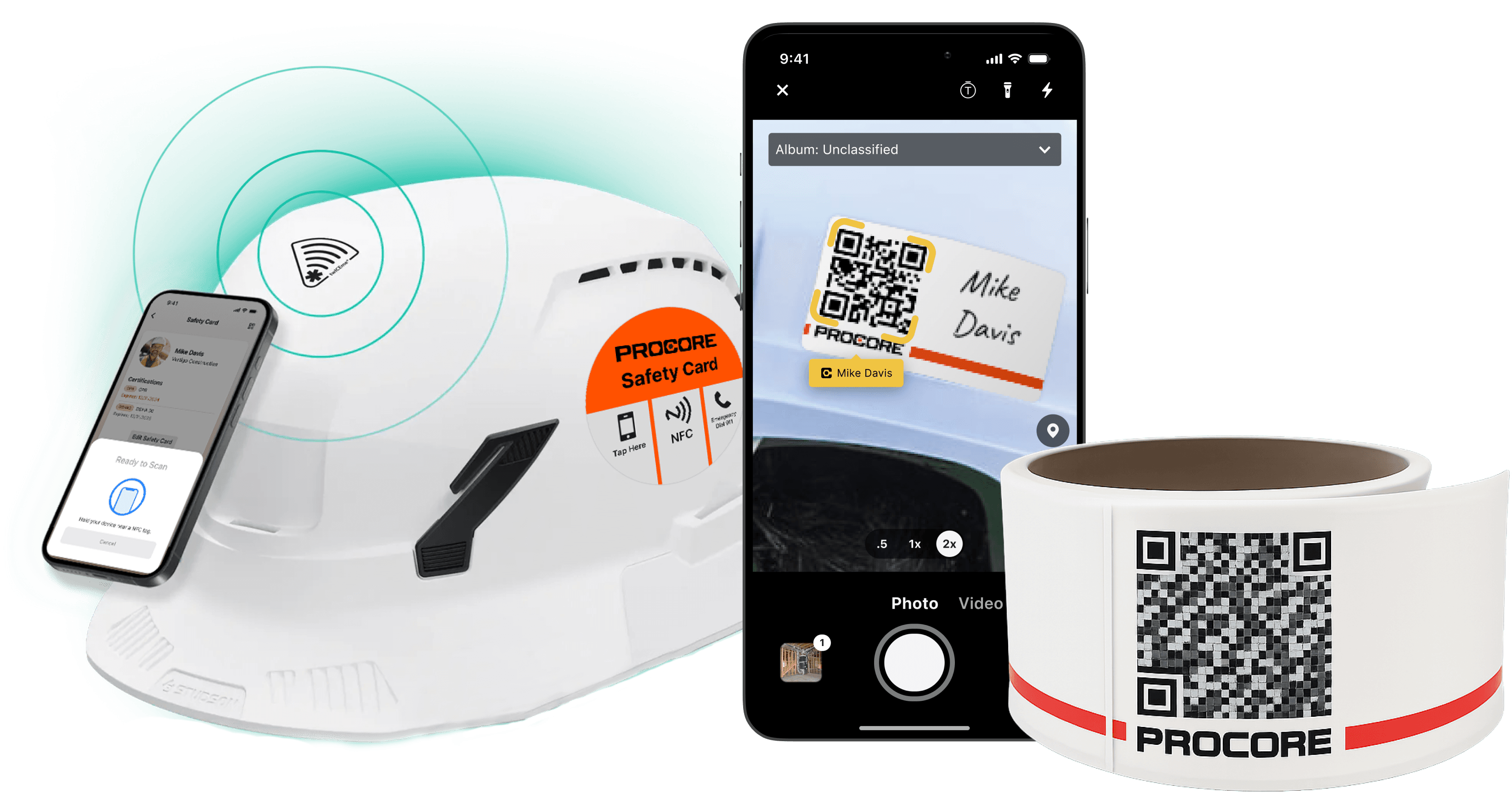
A mobile companion to the Qualifications Hub. Safety Cards give field team members instant access to their certification details, while QR and NFC stickers let anyone on site scan to verify a worker's qualifications in real time.
SAFETY CARD EXPERIENCE
NFC & QR CODE ACCESS
My Role:
Directed the cross-functional team and drove alignment on the vision connecting Safety Cards to the broader Qualifications ecosystem.
Why it Matters:
Bridges the gap between office-managed compliance data and field-level access, no phone calls, no spreadsheets, no delays.
4
Forms & Data Capture Strategy
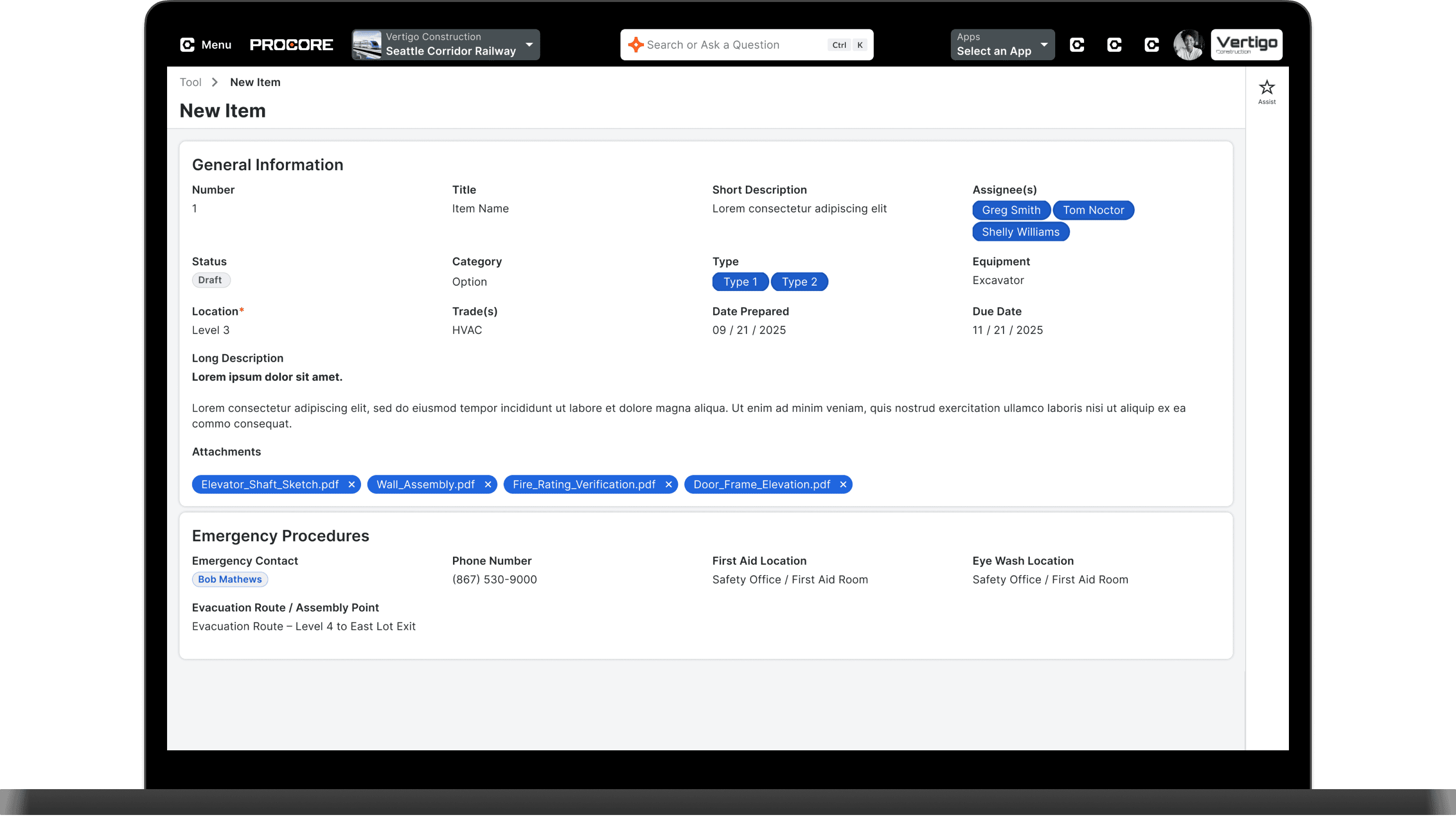
A platform-wide re-architecture of Procore's cross-platform form experience. Through contextual inquiry, we uncovered what the Design Systems team hadn't identified in years: specifically why forms were causing usability issues. Lack of visual grouping, buried critical fields, layouts causing information loss, and cross-tool inconsistency.
BEFORE
VALIDATED CONCEPT
My Role:
Drove the design strategy using field research insights, validated hypotheses with UX research, then ensured alignment across two organizations completely outside my reporting structure — the Tool Studio team and the Design Systems team.
Why it Matters:
Reduces time-on-task by ~8 seconds per input field. Establishes the scalable foundation for enterprise configurability and AI automation that EU digital compliance demands.
View Case Study
5
Media Products Redesign (Camera 2.0 + Web Photos)
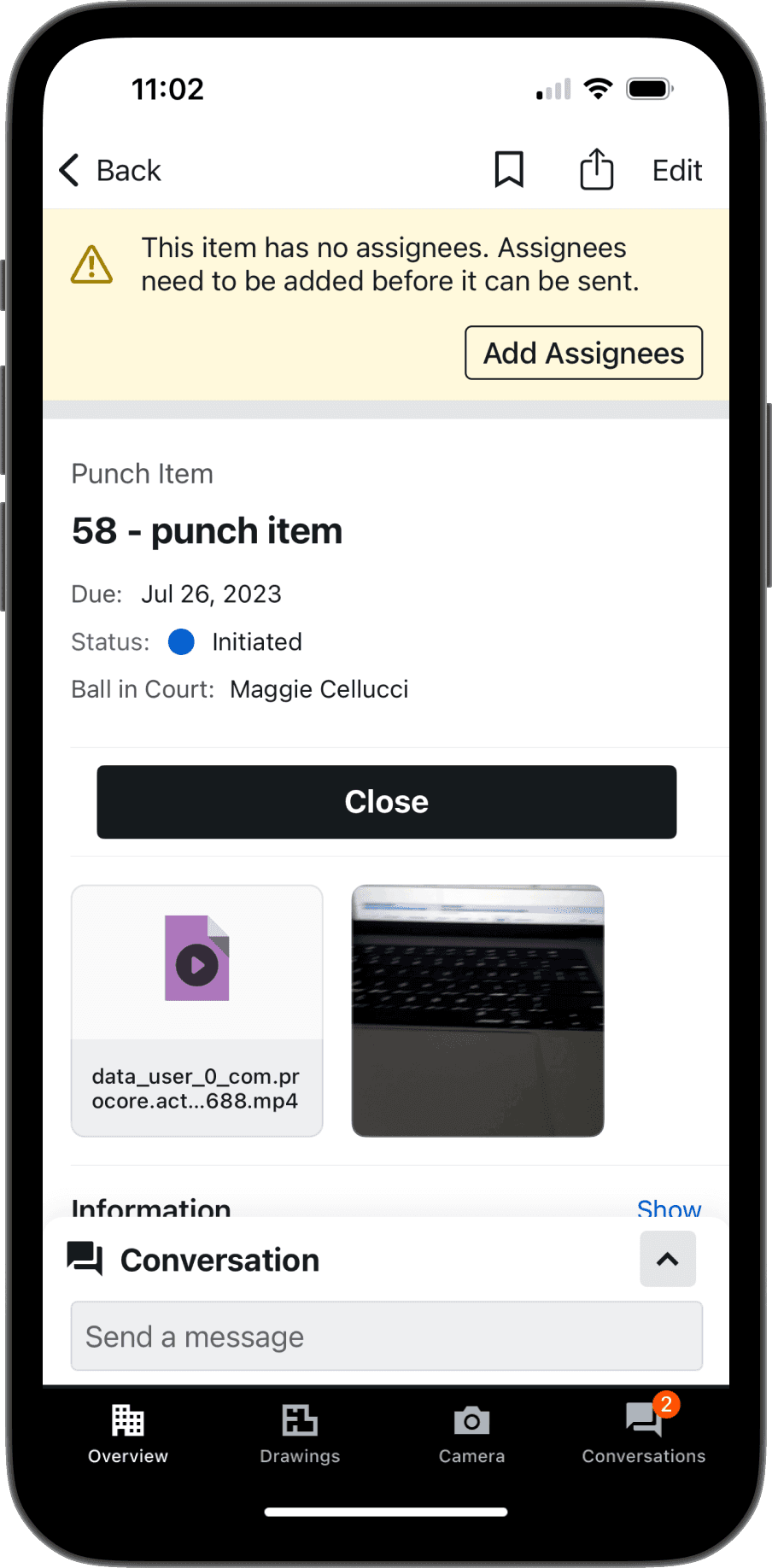
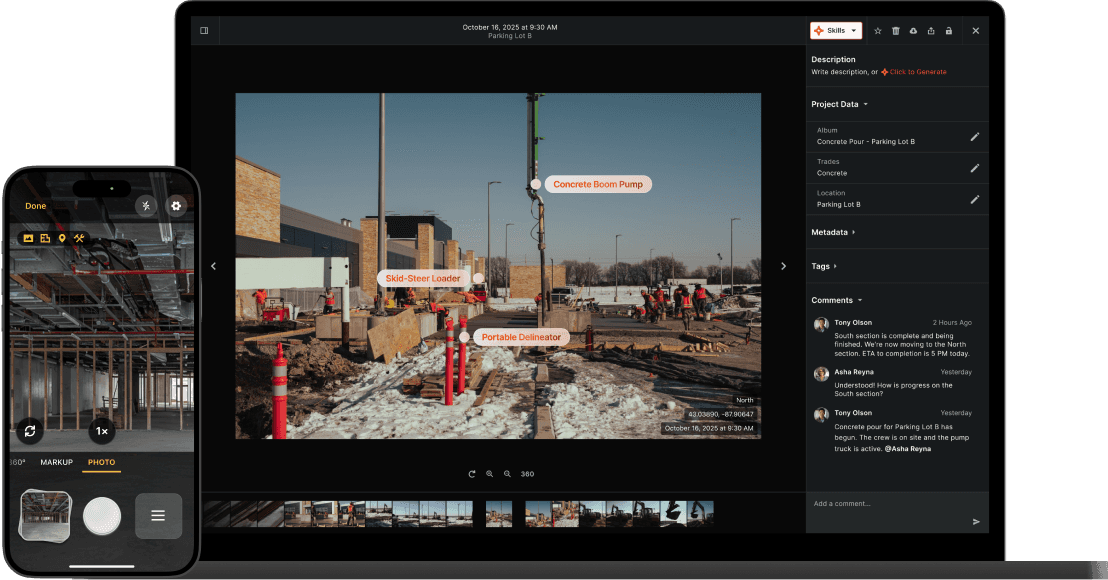
A complete reimagining of Procore's in-app camera and web photos experience. The old camera hadn't been touched in a decade. Camera 2.0 brings parity with native cameras while layering in construction-specific intelligence: markup mode, 360° camera pairing, quick launch widgets, and AI-powered photo descriptions.
My Role:
Directed a cross-functional team of globally distributed designers. This team was so capable. They produced some of the most impressive work at the company.
Why it Matters:
By embedding contextual metadata into capture workflows, photos shift from passive assets to actionable field records, providing structured data to the Safety Hub and preparing Procore for the next stage in AI — AI Assisted Safety Identification.
6
NextGen Silver Migrations
Modernization of Procore's core Q&S tools — Incidents, Inspections, Observations, and Photos — onto the next-generation design system. This connects to the NextGen program I previously operationalized on the Design Systems team.
My Role:
Guided both my direct team and the Tool Experience team (outside my span) through migration work. Helped break down the work, identify alignment gaps, and uncovered engineering enablement issues that were in turn prioritized by the Design System team.
Why it Matters:
NextGen compliance was necessary for EU and FedRamp market readiness and had to align with an aggressive new-feature roadmap.
7
Go-To-Market Enablement
Created Groundbreak marketing materials, the Media Adoption Playbook, Safety Product Overview for sales, and customer adoption timelines. When strategic accounts wavered, I mapped requirements against capabilities and built step-by-step adoption plans.
My Role:
While my team executed product work, I leaned into customer-facing teams to drive adoption — evangelizing the work, creating enablement artifacts, and directly intervening on strategic accounts.
Why it Matters:
The best product doesn't matter if customers don't know how to adopt it. This work directly protected and accelerated revenue.
GROUNDBREAK BETA SIGN-UPS
FASTER USABILITY TESTING
Delivery
11 GA releases · 5 betas launched · 4 NextGen Silver migrations · Required Field Validation across 21 forms (75% CSAT, ~17% reduction in time to task)
Client Engagement
273 client calls (1.1/workday) · 8 job site visits · 7 workshops · 6 Groundbreak events
Org Influence
Operating model adopted by Design Ops org-wide · Created Pixel Perfect Award · First team at Procore with bottoms-up planning
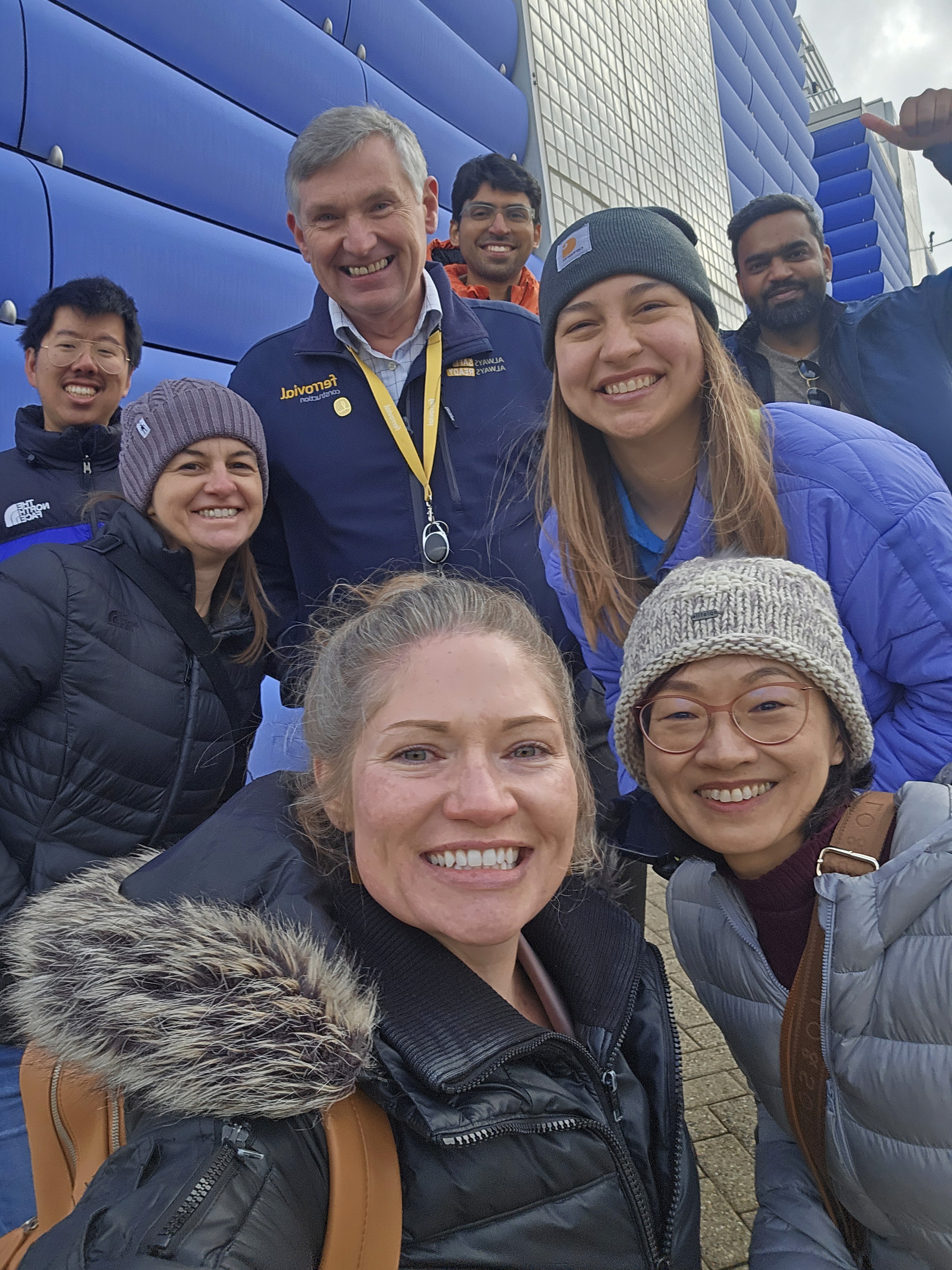
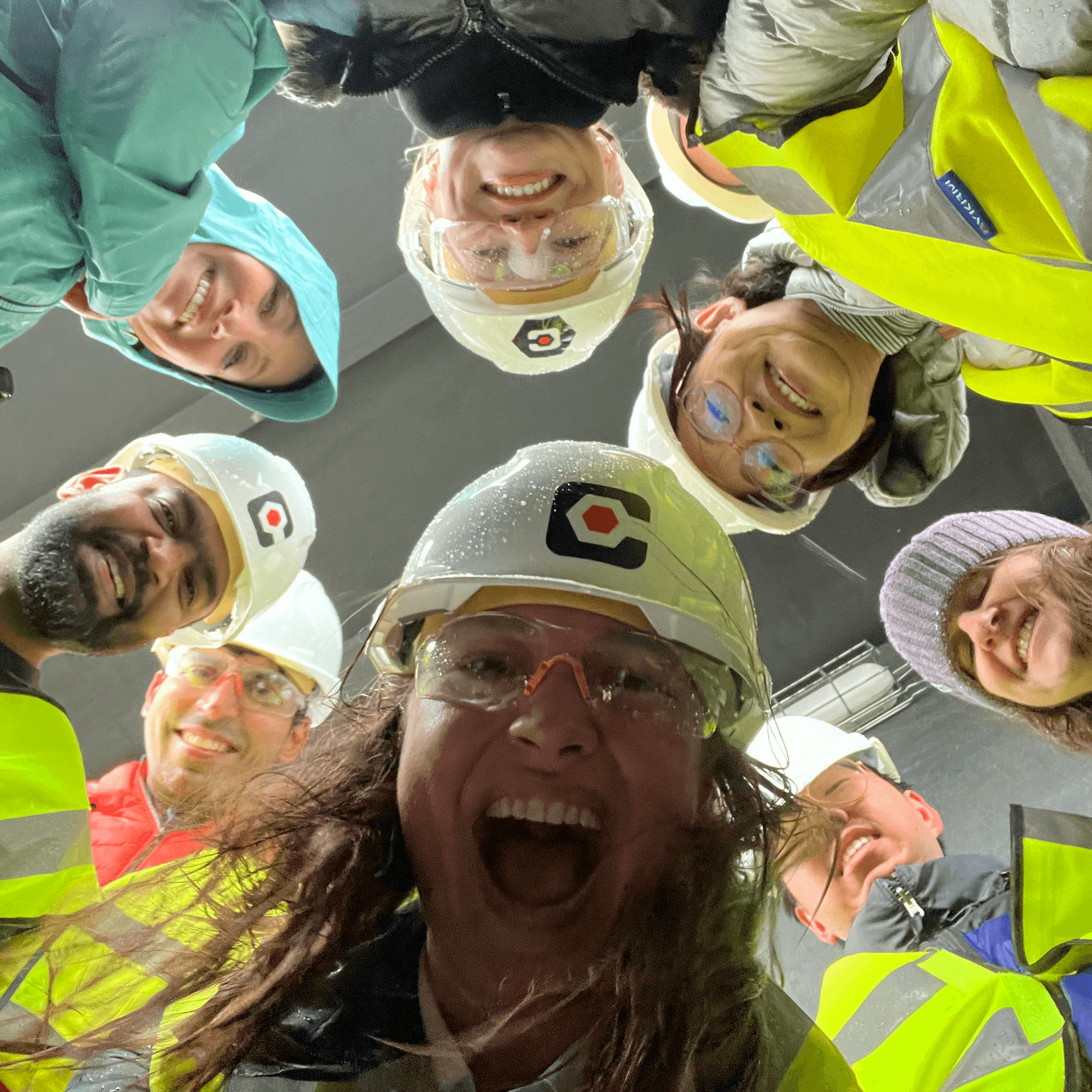
The biggest challenges in enterprise software rarely reside within a single team's domain. It's about the ability to identify a systemic issue, validate through research, and coordinate across organizations you don't directly manage around a common goal.
Building an engine isn't glamorous work, but it's the work that makes everything else possible. The operating model, the council, the team scaling, the product portfolio, and the GTM enablement were all interdependent — the process gave new designers a system to plug into, the council gave the team real-world signal to design against, the team's growth gave us capacity to deliver, and the enablement work ensured what we shipped actually reached customers.
The moment I'm most proud of isn't a ship date or a metric. It's the fact that when things got tough in mid-2025 — when onboarding was outpacing capacity and deadlines were at risk — the system held, and the team was resilient. The engine we built didn't just survive the stress test. It's what pulled us through.