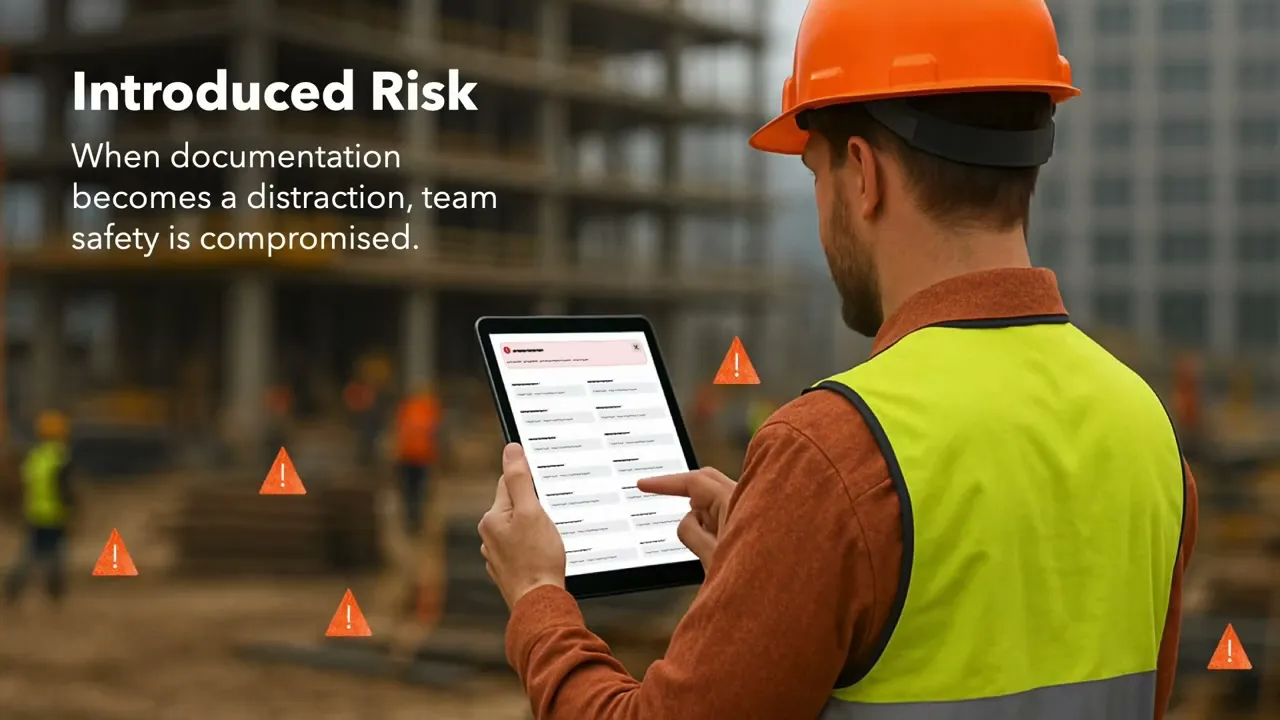
The Burden of Capture
Because accurate data is so crucial, Procore's primary mechanism to ensure completion has been to add friction — most notably required fields — across both web and mobile forms. While this forces data capture, it also slows teams down.
We are blocking the flow of data.
Current forms are tedious and labor-intensive, turning a simple task into a mental workout.

In Procore's rush to scale, it sacrificed the experience.
In pursuit of scalability, Procore unintentionally shifted the complexity onto our customers.
Procore let construction complexity drive the experience.
Instead of translating construction’s complexity into clarity, we duplicated it in our product.
The Market Opportunity
The construction industry is experiencing a global shift toward mandatory digital compliance.
The EU's revised Construction Products Regulation (2025) mandates digital product passports, structured safety reporting, and environmental documentation throughout the entire value chain. In the U.S., OSHA's 2026 updates require digital safety records and improved reporting.
Platforms that capture structured, real-time field data will lead this transition.
Procore captures only 3% of the $2T EU construction market today & digital compliance and safety reporting capabilities are the key to unlocking it
Structured field data and safety intelligence become Procore's competitive moat
Intelligent automation allows for leaner field operations, helping construction companies grow despite labor shortages.
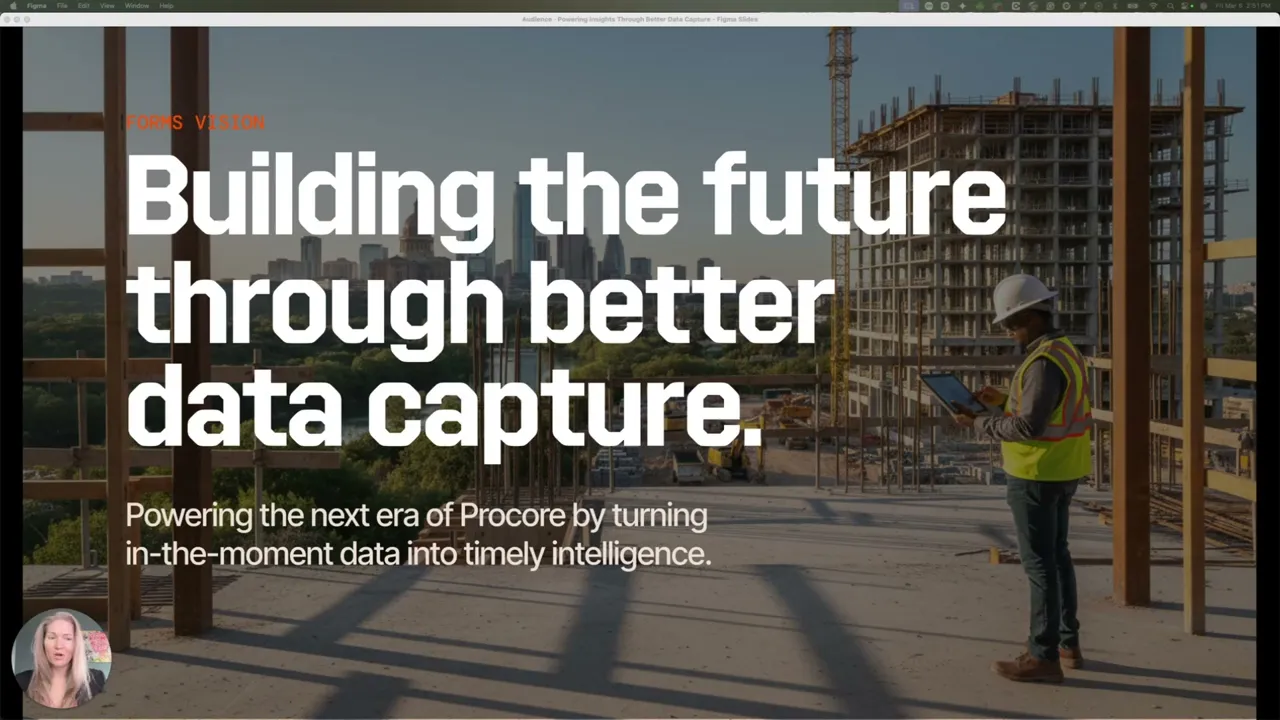
ROLE
Design Strategy Lead
SCOPE
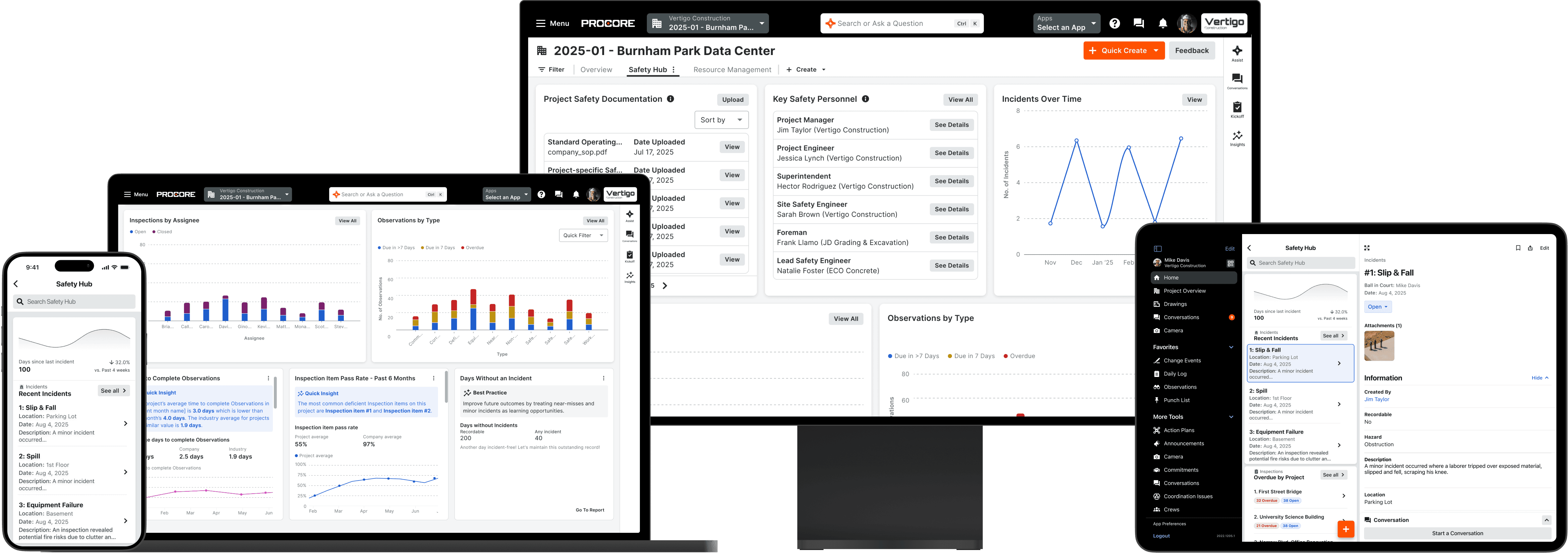
Cross-platform data entry (web + mobile), Safety Hub, Media evolution
INFLUENCE
Led strategy across 4 product portfolios, 2 outside my direct span. Aligning product, engineering, and research around a unified vision.
~8-second reduction per input field across every form in the platform
KEY METRICS
EU & FedRamp Market Readiness
Increased Data Integrity & Risk Reduction
Reduced Time-on-Task & Resolved Long-Standing Usability Issues
1
Clear visual grouping drives comprehension
Users strongly prefer layouts with clearly defined sections or “blocks,” which reduce visual overload and make information easier to scan.
2
Critical fields must appear first
Key information (status, assignee, due date, description) needs to be placed at the top of the form to support quick review and decision-making.
3
Wide layouts cause users to lose information
When content stretches too far horizontally, users forget or miss fields on the far right; structured grouping solves this more effectively than reducing or changing column count.
4
Consistency across tools is essential
Variability in layout and component patterns forces users to relearn navigation, slowing down high-frequency workflows.
5
Use AI to automate stable, factual data, not judgment-based fields
Users trust AI automation for predictable metadata (names, dates, IDs) but want full control over subjective or interpretive fields.
Heuristic Evaluation Findings
The current form template aligns with some Gestalt and NN/g design principles but lacks clarity in hierarchy, spacing, and continuity, creating cognitive strain and slowing comprehension.
Lack of Grouping & Boundary Clarity
Disrupted Continuity & Scanning Flow
Weak Hierarchy & Emphasis
Flattened Figure–Ground Separation
High Visual Load & Density

1
Platform Re-Architecture
Re-architected Procore’s cross-platform form experience to reduce systemic friction and establish a scalable foundation for configurability and AI automation.
2
Usability Modernization
Resolved long-standing usability inconsistencies across web and mobile by aligning workflows with research-backed best practices.
3
Productivity at Scale
Reduced time-on-task by ~8 seconds for every form input field through intelligent automation and workflow configurability, saving each user weeks of productivity annually.
4
Data Integrity & Risk Reduction
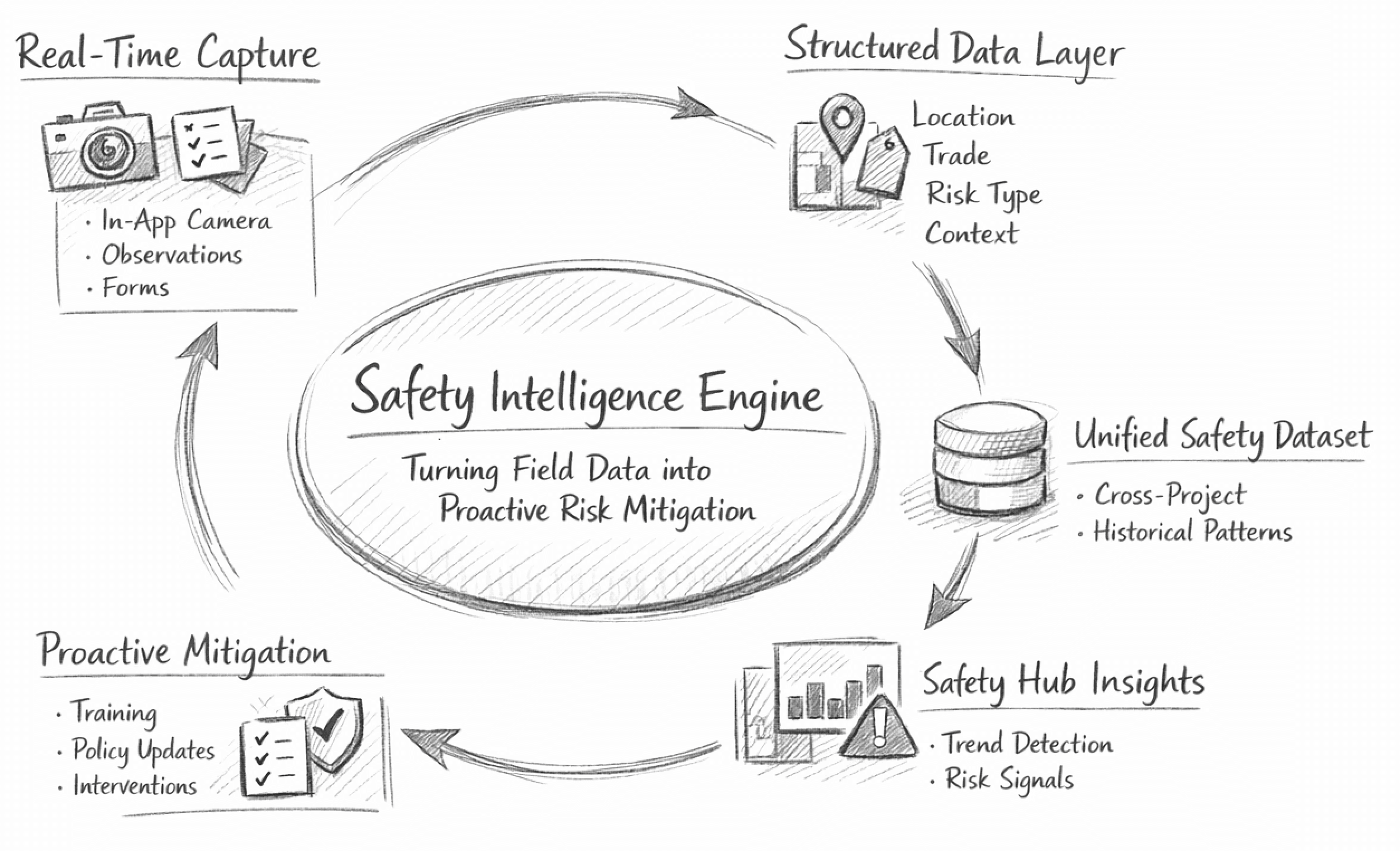
Improved documentation accuracy and operational safety by enabling in-the-moment capture rather than end-of-day recall.
5
Enterprise Retention Leverage
Strengthened enterprise retention by modernizing a mission-critical, daily-use workflow central to customer operations.
Reduced Time-on-Task
1
Reduced time-on-task by ~8 seconds for every form input field through intelligent automation and workflow configurability, saving each user weeks of productivity annually.
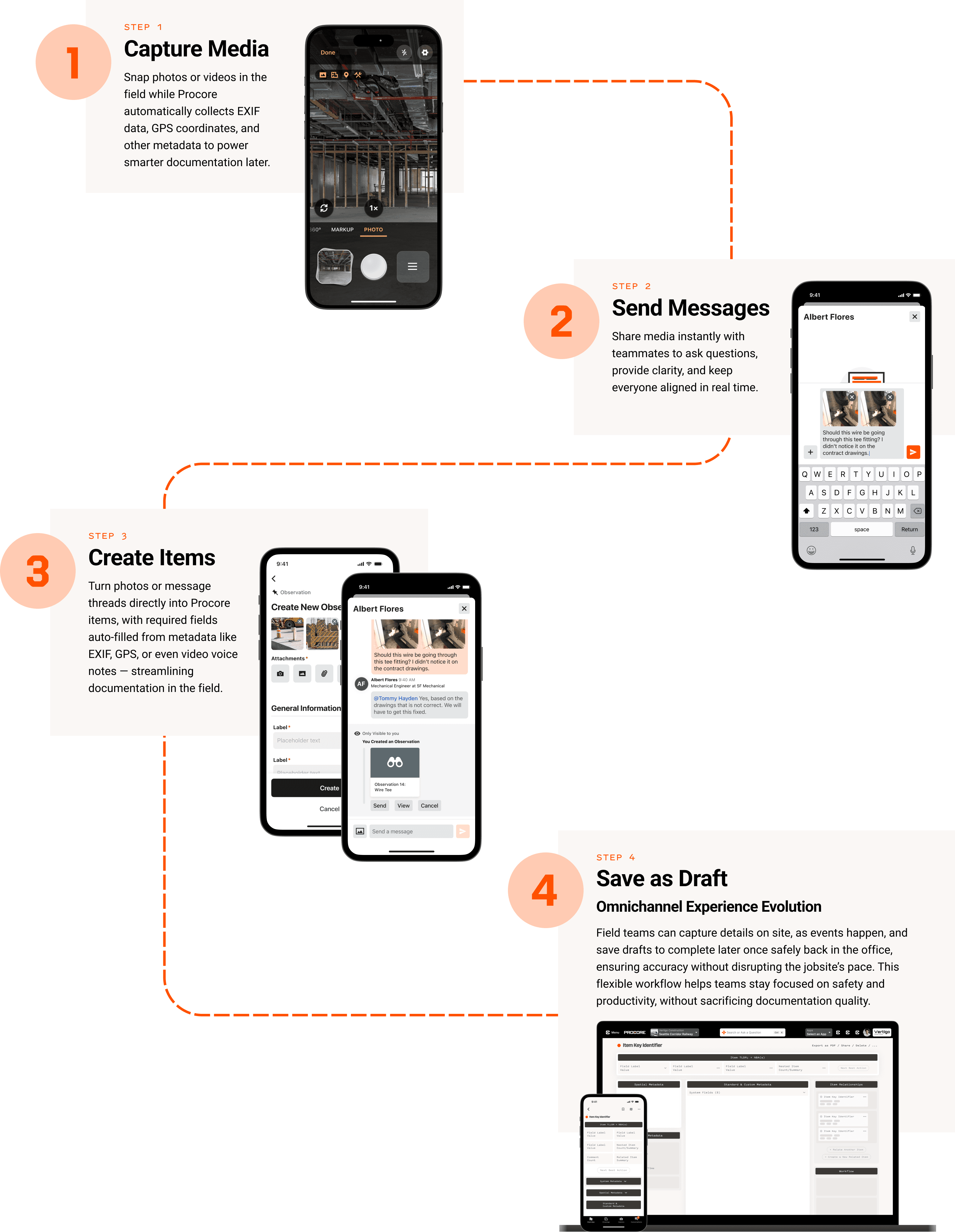
Omnichannel Experience Evolution
Re-architected Procore’s cross-platform form experience to reduce systemic friction and establish a defensible, scalable foundation for enterprise configurability and AI automation.
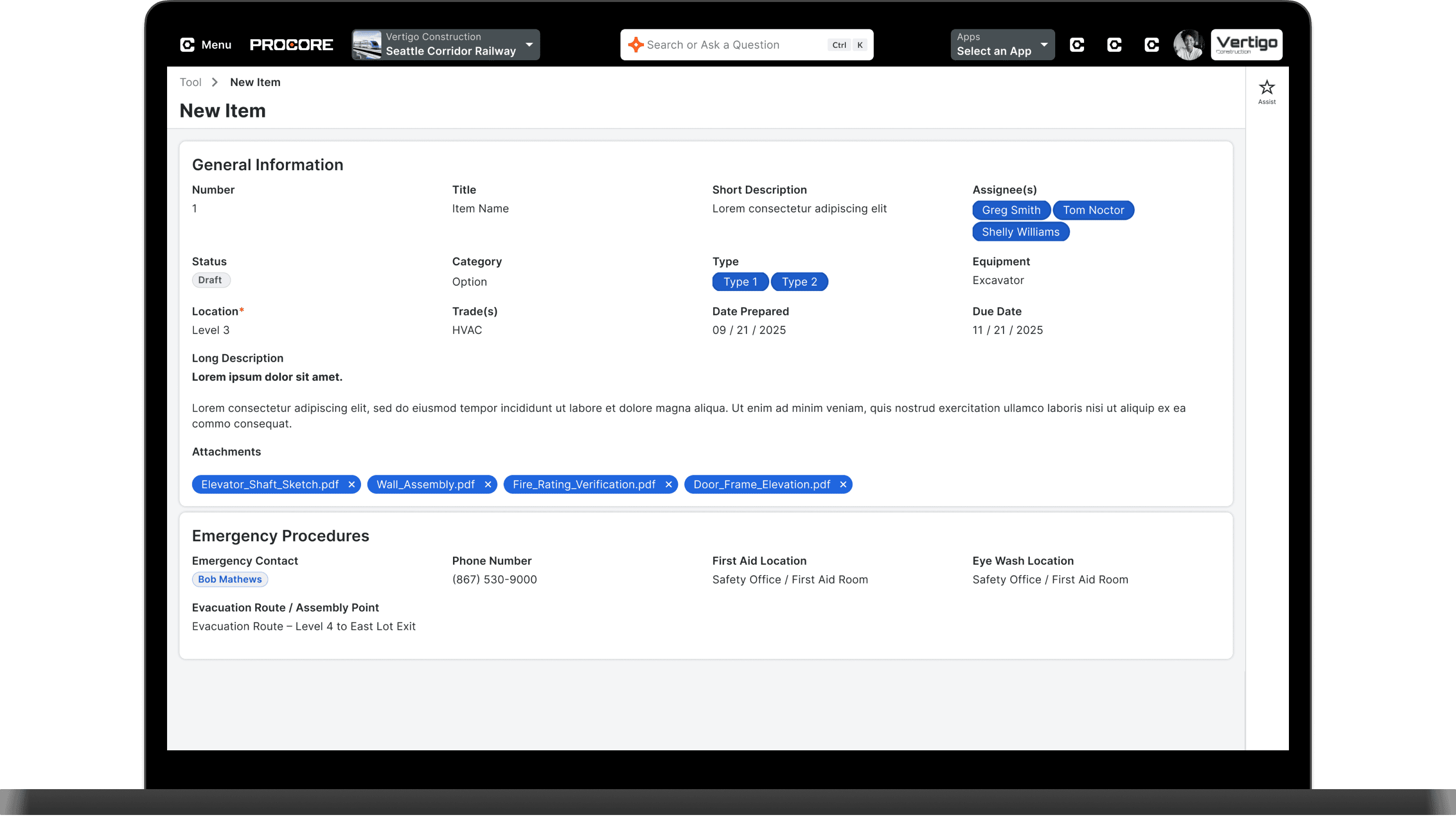
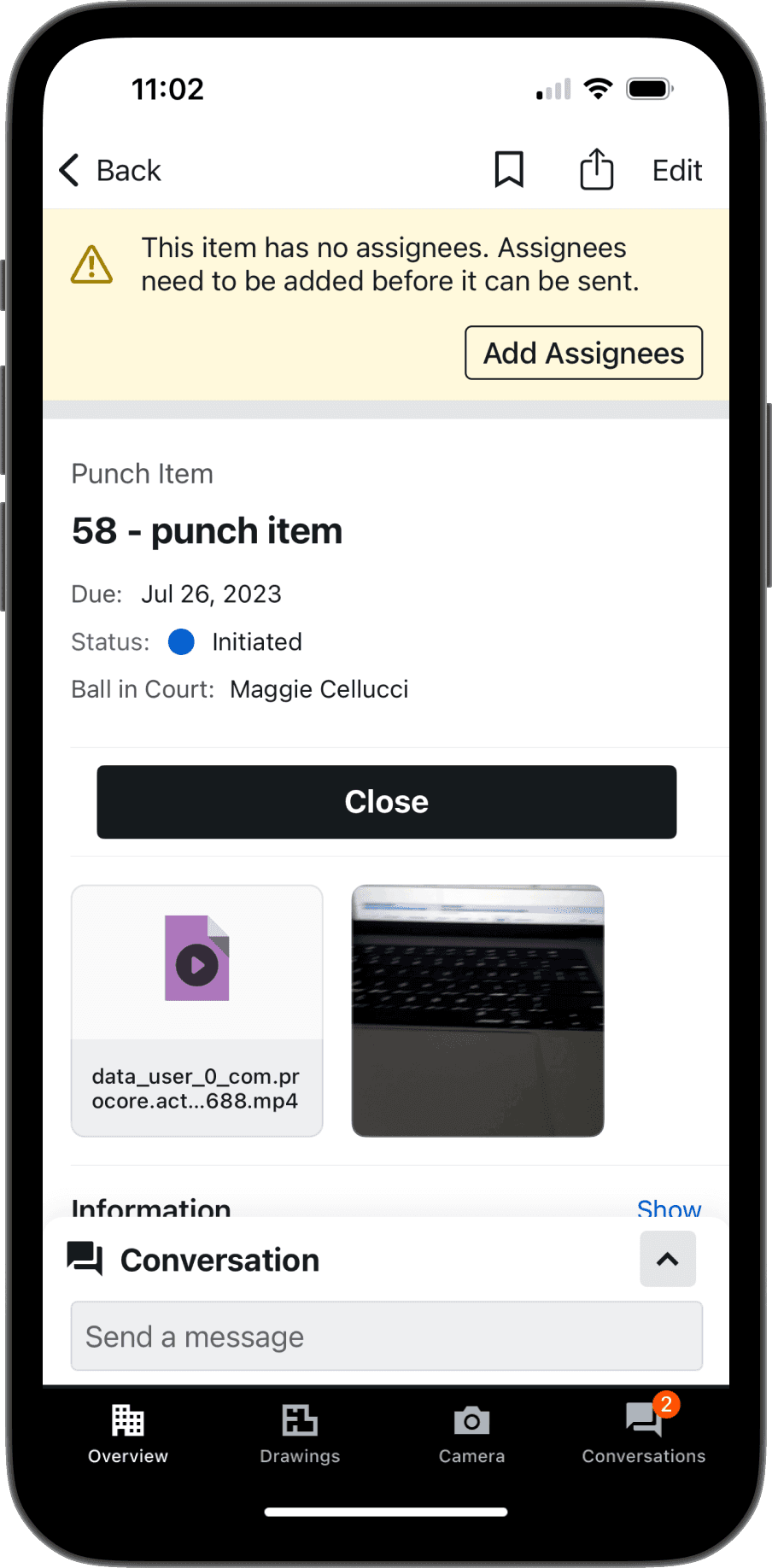
BEFORE
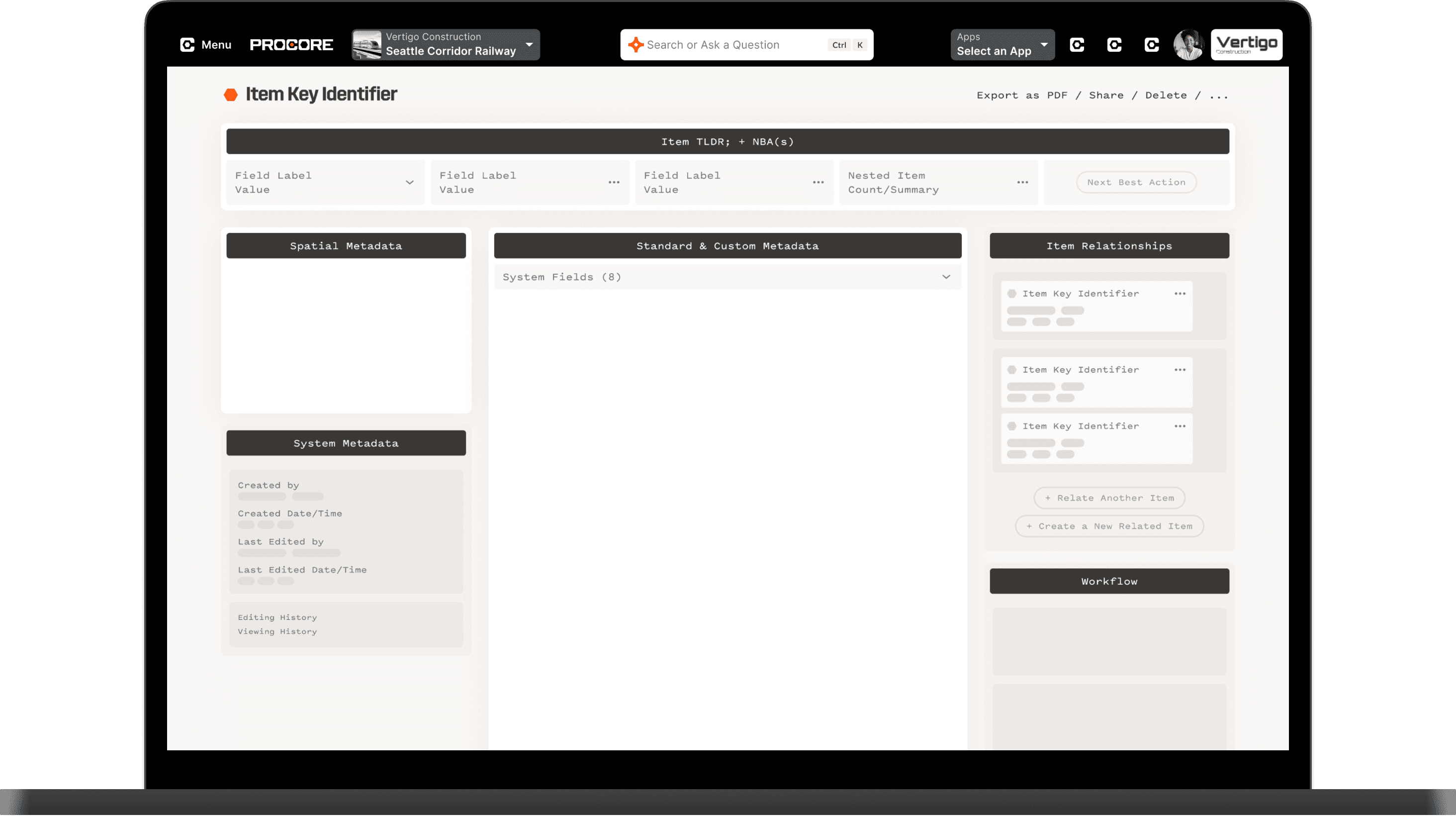
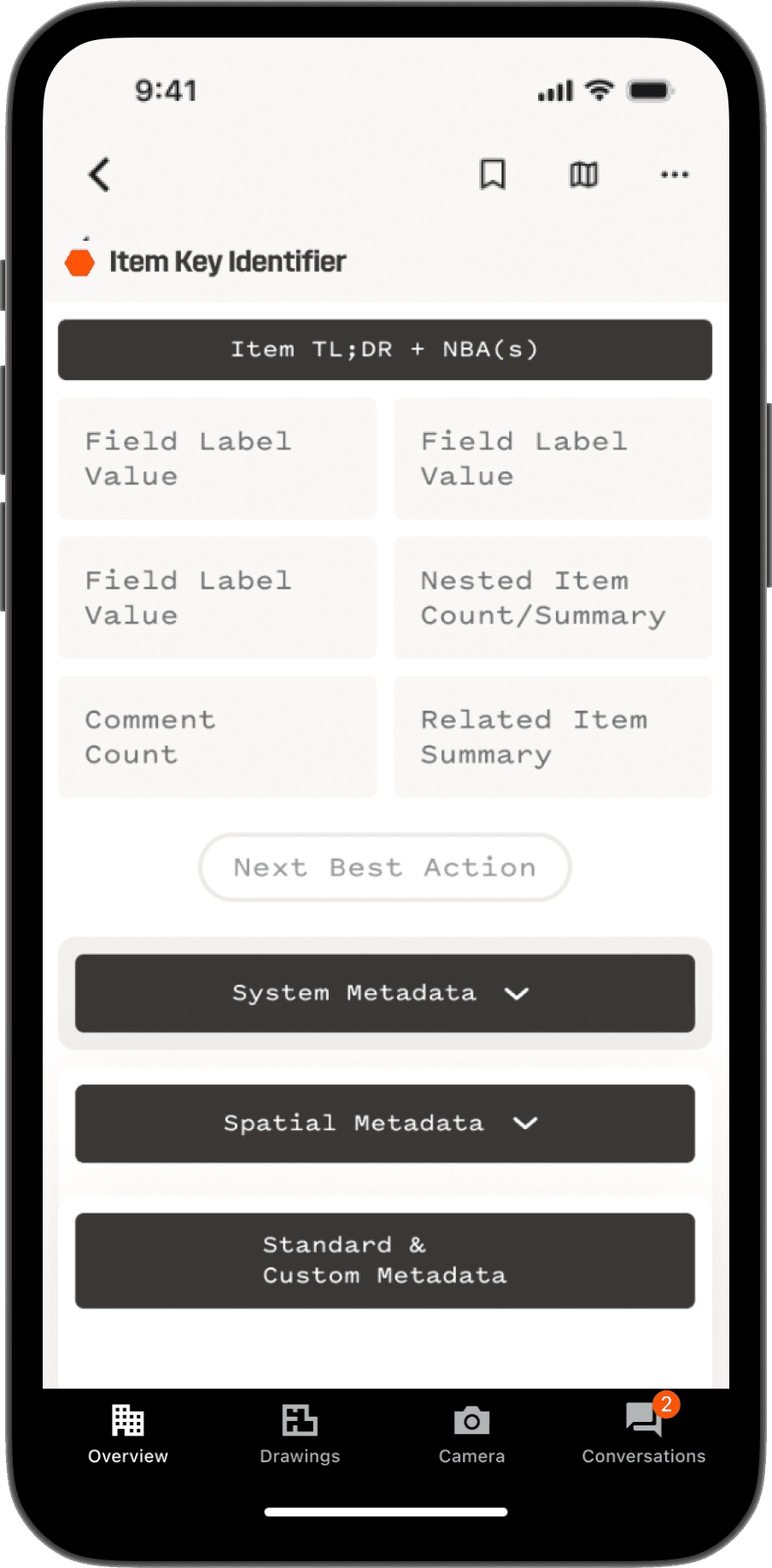
VALIDATED CONCEPT
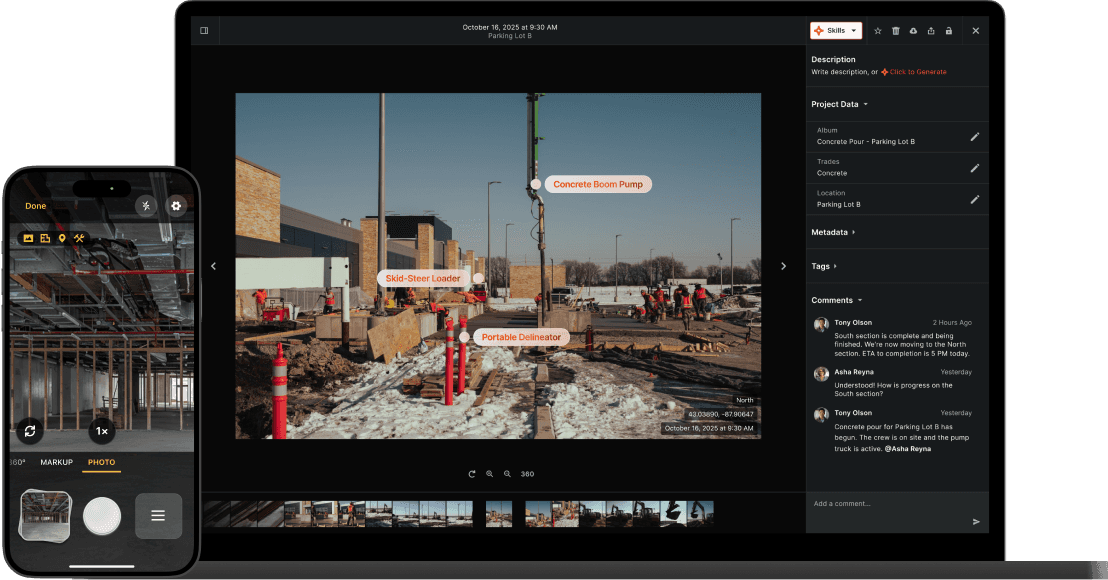
Media Experience
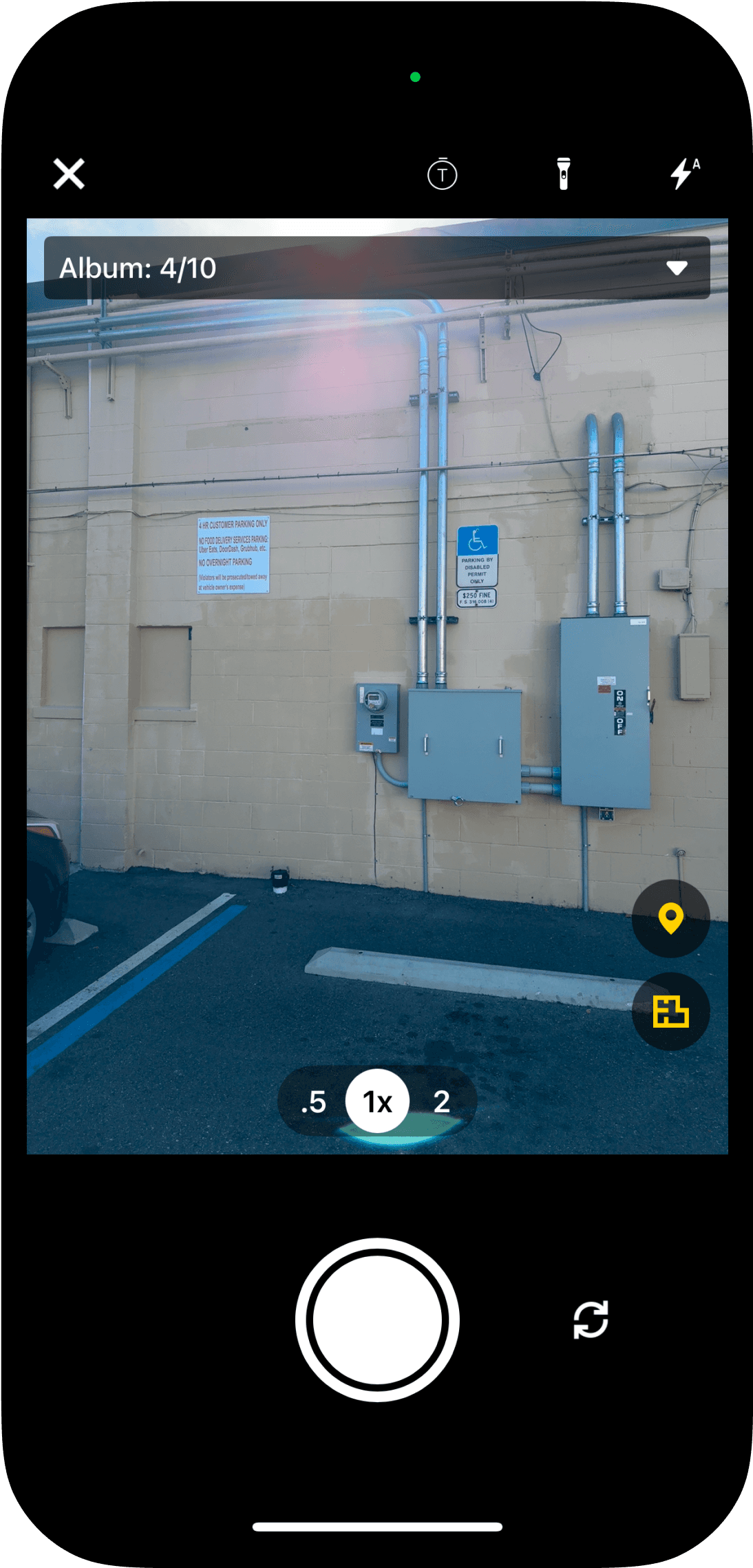
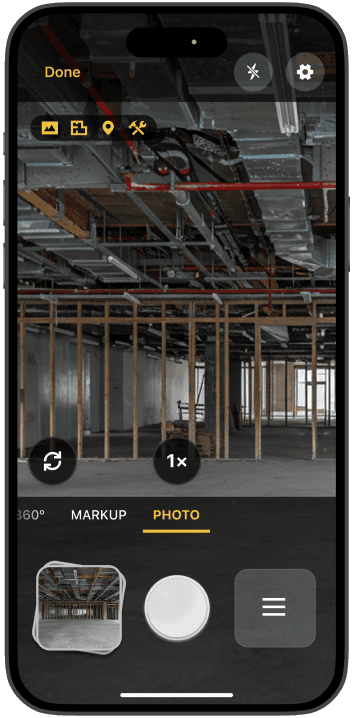
We reimagined the in-app camera experience to match the intuitive, consumer-grade standards users expect, while layering in construction-specific intelligence that native cameras simply can’t provide.
By reducing friction and embedding contextual metadata directly into capture workflows, we transformed media from a passive asset into an actionable field record.